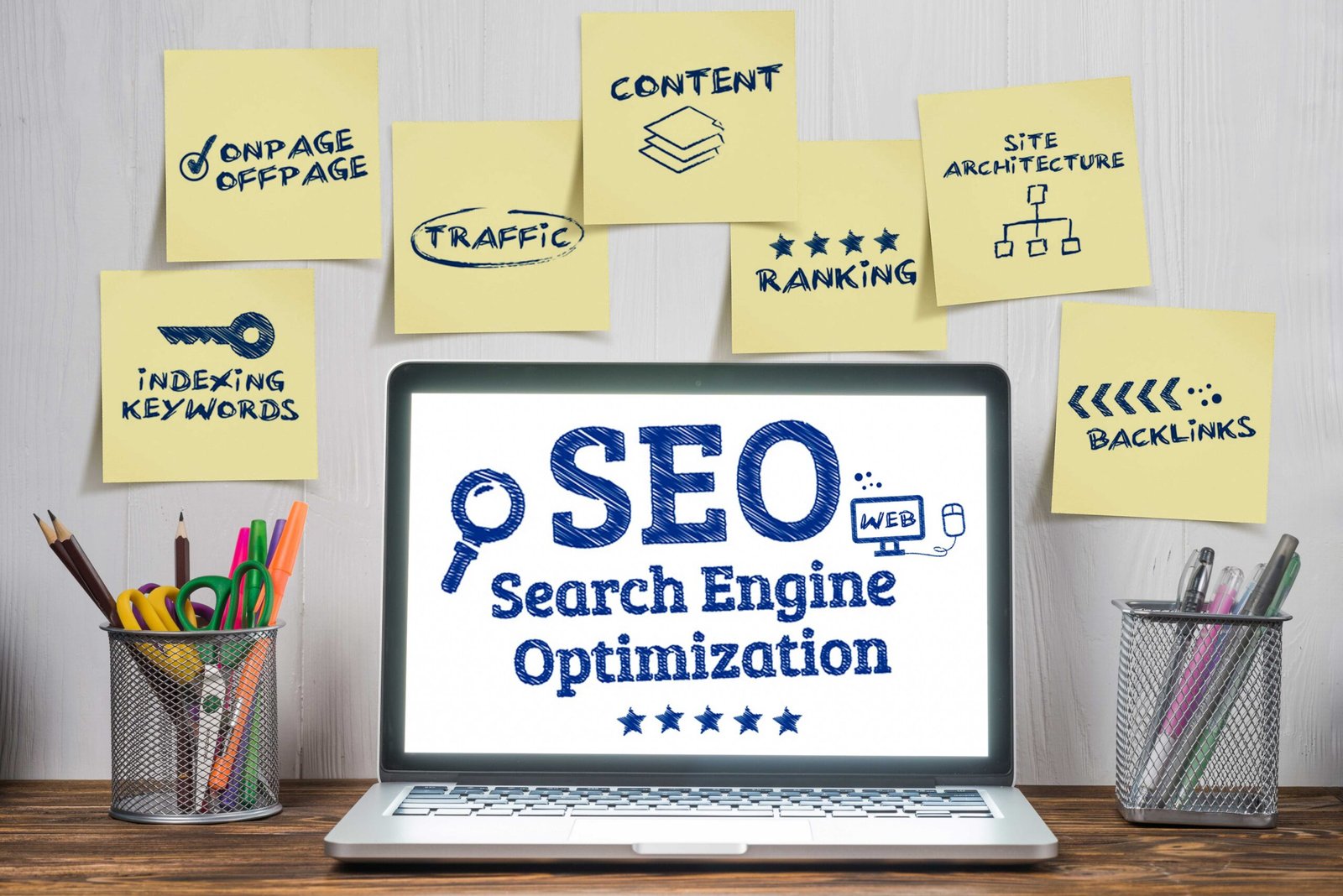

What is SEO?
SEO stands for Search Engine Optimization. It is the practice of optimizing your website, content, and technical structure so search engines like Google can understand your pages and recommend them to users searching for relevant information.The primary objective of SEO is simple:Increase website visibilityImprove organic trafficBuild authorityGenerate more leads and salesUnlike paid advertising, SEO focuses on earning traffic naturally through high-quality content and a well-optimized website.For example, if someone searches “best running shoes”, Google analyzes millions of pages before displaying the most relevant and trustworthy results. SEO helps your website become one of those recommended pages.
Why is SEO Important?
Many people think having a website is enough.Unfortunately, that’s not true.Without SEO, your website is like opening a store in the middle of a desert no one knows it’s there.SEO helps businesses:Reach customers organicallyBuild trust with usersReduce advertising costsIncrease website trafficImprove user experienceGenerate long-term business growthOne well-optimized article can continue bringing visitors for months or even years without additional advertising costs.That’s why SEO is considered one of the highest-return digital marketing strategies.
How Does Google Rank Websites?
Google’s job is to deliver the best possible answer for every search query. To achieve this, Google’s algorithms evaluate hundreds of ranking factors before deciding which pages deserve the top positions.Some of the most important factors include:
Content Quality
Google prefers content that:
- Answers user questions completely Is original
- Provides valueIs regularly updated
- Demonstrates expertise
- Thin or copied content rarely performs well.
Keyword Relevance
Google needs to understand what your page is about.
Using your primary keyword naturally in:
- Title
- URL
- Introduction
- Headings
- Meta description
- Image alt text helps search engines identify your topic.
Avoid stuffing the same keyword repeatedly, as modern algorithms prioritize natural language and context.
User Experience
A website should be easy to navigate. Google rewards websites that provide:
- Fast loading speed
- Mobile-friendly design
- Secure HTTPS connection
- Easy navigation
- Readable content
Visitors should find answers quickly without unnecessary distractions.
Backlinks
Backlinks are links from other websites pointing to your content.
Google treats quality backlinks as votes of confidence.
However, quality matters far more than quantity.
A few backlinks from authoritative websites are more valuable than hundreds of low-quality links.
Types of SEO:
SEO isn’t just about adding keywords.It consists of several important areas that work together.
1. On-Page SEO
On Page SEO means optimizing the content and elements inside your website pages so that Google can understand your page and rank it higher in search results.
Examples include:
- High-quality content
- Internal linking
- Optimized headings
- Image optimization
- Meta titles
- Meta descriptions
- URL structure
2. Off-Page SEO
Off-page SEO refers to activities performed outside your website that improve authority. Examples include:
- Backlinks
- Guest posting
- Social media sharing
- Brand mentions
- Digital PR
Strong off-page SEO tells Google that other websites trust your content.
3. Technical SEO
Technical SEO ensures your website functions properly behind the scenes. Important areas include:
- XML sitemap
- Robots.txt
- HTTPS security
- Website speed
- Core Web Vitals
- Mobile responsiveness
- Structured data
- Crawlability
Even the best content can struggle if technical SEO issues prevent Google from accessing your pages.
How Search Engines Work :
Before ranking websites, search engines follow three essential steps.
Crawling
Google’s bots discover new pages by following links across the internet.
Indexing
Once discovered, Google analyzes your content and stores it in its index.
Ranking
When someone performs a search, Google’s algorithms decide which indexed pages provide the best answers.The highest-quality, most relevant pages appear first.
How to Rank on Google?
Ranking on Google isn’t about shortcuts or secret tricks. It’s about consistently creating valuable content, optimizing your website, and building trust over time.The following strategies form the foundation of a successful SEO campaign.
Step 1: Perform Keyword Research.
Every successful SEO strategy starts with understanding what your audience is searching for.
Look for keywords that have:
- High search intent
- Good search volume
- Low to medium competition
- Clear relevance to your business
Don’t focus only on broad keywords. Long-tail keywords often convert better because they match specific user intent.
For example, instead of targeting “SEO”, you could target phrases like:
- What is SEO
- How to rank on Google
- SEO for beginners
- Best SEO tips for small businesses.
Choosing the right keywords helps you create content that answers real questions people are asking.
Step 2: Create Helpful Content.
Google rewards content that genuinely helps users. Rather than writing just to include keywords, focus on solving problems, answering questions, and providing actionable advice.
High-quality content should be:
- Original
- Accurate
- Well-structured
- Easy to read
- Updated regularly
Remember, you’re writing for people first and search engines second.
Step 3:
Optimize Your Title Tags and Meta Descriptions
our title tag is one of the first things users notice in Google’s search results. It should be compelling, descriptive, and include your primary keyword naturally.
Best Practices for Title Tags
- Keep the title under 60 characters.
- Place the focus keyword near the beginning.
- Make it engaging to encourage clicks.
- Ensure every page has a unique title.
Your meta description doesn’t directly influence rankings, but it plays a significant role in improving click-through rates.
A well-written meta description should:
- Summarize the page accurately.
- Include the focus keyword naturally.
- Stay within 150–160 characters.
- Encourage users to visit your page.
Step 4: Optimize Your Content Structure
A well-organized article is easier for both readers and search engines to understand.
Use clear heading tags:
H4: H1
Use only one H1 for your main title.
H4: H2
Divide your article into major sections.
H4: H3
Break down each section into detailed topics.
H4: H4
Use H4 headings for supporting points, examples, or checklists.
Also, keep your paragraphs short, use bullet points where appropriate, and include transition words to improve readability.
Step 5: Improve Website Speed
Website speed has a direct impact on user experience. Visitors are likely to leave if a page takes too long to load.
To improve loading speed:
- Compress images before uploading.
- Enable browser caching.
- Minify CSS and JavaScript files.
- Use a reliable hosting provider.
- Implement a Content Delivery Network (CDN).
A faster website improves user satisfaction and can positively influence search rankings.
Step 6: Make Your Website Mobile-Friendly
Most internet users now browse on smartphones and tablets. Google primarily uses the mobile version of your website for indexing and ranking.
To create a mobile-friendly website:
- Use a responsive design.
- Ensure text is readable without zooming.
- Make buttons easy to tap.
- Optimize images for mobile devices.
- Test your site on multiple screen sizes.
A seamless mobile experience helps visitors stay longer and engage with your content.
Step 7: Build High-Quality Backlinks
Backlinks remain one of Google’s strongest ranking signals. When reputable websites link to your content, it indicates that your information is trustworthy and valuable.
Effective ways to earn backlinks include:
- Publishing comprehensive guides.
- Writing guest posts on relevant websites.
- Creating original research or case studies.
- Designing infographics that others want to share.
- Networking with industry experts.
Focus on earning links naturally rather than purchasing them, as low-quality backlinks can harm your SEO performance.
Step 8: Use Internal Linking
Internal links connect one page of your website to another.
They help:
- Improve website navigation.
- Spread page authority across your site.
- Keep visitors engaged longer.
- Help Google discover and index more pages.
Whenever relevant, link to related blog posts, service pages, or resources within your website.
Step 9: Optimize Images
Images make your content more engaging, but they also need optimization.
Best practices include:
- Use descriptive file names.
- Add meaningful alt text.
- Compress images to reduce file size.
- Choose modern image formats like WebP when possible.
- Avoid uploading unnecessarily large images.
Optimized images improve page speed and can generate additional traffic through image search.
Step 10: Monitor and Improve Your SEO
SEO is an ongoing process rather than a one-time task.
Regularly review your website’s performance by monitoring:
- Organic traffic.
- Keyword rankings.
- Click-through rates.
- Bounce rate.
- Page speed.
- Conversion rates.
Analyze what is working, identify areas for improvement, and update older content to keep it relevant.
On-Page SEO Checklist:
-
Primary Keyword Research
-
Secondary Keywords Research
-
Search Intent Analysis
-
SEO-Friendly Title Tag
-
Primary Keyword in Title
-
SEO-Friendly URL
-
Optimized Meta Description
-
Primary Keyword in First Paragraph
-
One H1 Heading Only
-
Proper H2, H3, and H4 Structure
-
Keywords Used Naturally
-
High-Quality Original Content
-
Relevant Internal Links
-
Relevant External Links
-
mage Optimization
-
Optimized Image File Names
-
Image Alt Text Added
-
Featured Image Added
-
Content Readability Checked
-
Short Paragraphs and Sentences
-
Bullet Points and Lists Added
-
Mobile-Friendly Content
Page Speed Optimization
-
Schema Markup Added
-
FAQ Section Added Where Relevant
-
Call-to-Action Added
-
Grammar and Spelling Checked
-
Duplicate Content Checked
-
Broken Links Checked
-
Final SEO Score and Preview Checked
Technical SEO Checklist
A technically sound website is essential for long-term SEO success.
Review the following regularly:
- HTTPS enabled
- XML sitemap submitted
- Robots.txt configured correctly
- Fast page loading speed
- No broken links
- Mobile responsiveness
- Structured data implemented
- Canonical URLs configured
- Clean URL structure
- No duplicate content
Common SEO Mistakes to Avoid
Many beginners unintentionally damage their rankings by making avoidable mistakes.
Some of the most common include:
- Keyword stuffing
- Publishing thin or low-quality content
- Ignoring search intent
- Duplicate content
- Slow-loading pages
- Missing meta descriptions
- Broken internal links
- Poor mobile usability
- Not updating old content
- Buying spammy backlinks
Avoiding these mistakes will help your website build long-term authority.
Best SEO Tools
Using the right tools can simplify your SEO efforts and help you make data-driven decisions.
Popular SEO tools include:
- Google Search Console
- Google Analytics
- Google Keyword Planner
- Ahrefs
- SEMrush
- Screaming Frog SEO Spider
- Moz Pro
- Ubersuggest
These tools can help with keyword research, technical audits, backlink analysis, and performance tracking.
The Future of SEO
SEO continues to evolve as search engines become more intelligent.
Some important trends shaping the future include:
- AI-powered search experiences
- Voice search optimization
- Search intent optimization
- User experience as a ranking factor
- Helpful, people-first content
- Core Web Vitals
- Structured data and rich results
Websites that prioritize valuable content and excellent user experience are more likely to achieve sustainable rankings.
Conclusion
SEO is one of the most effective digital marketing strategies for building sustainable online visibility. By understanding how search engines work and focusing on high-quality content, technical optimization, user experience, and authoritative backlinks, you can improve your chances of ranking on Google’s first page.Remember that SEO is not about chasing quick wins or exploiting loopholes. It is about consistently creating helpful content, optimizing your website for both users and search engines, and adapting to changes in search algorithms over time.
Follow us for more Blogs on http://www.instagram. and for more articles on http://www.webnomic.in